Why Link Building Still Matters More Than Ever
Let me be honest with you. In the last two years, a lot of people started saying that link building is dead. They said artificial intelligence, Google’s AI Overviews, and zero-click searches would make backlinks irrelevant.
Link building in 2026 is not dead. It has evolved. And if you understand how it has changed, and what it will look like through 2027 — you will have a serious competitive advantage over every website in your niche that is still using outdated methods.
Link building actually is, why it still drives rankings, how Google evaluates backlinks in the AI era, and the exact strategies you should be using right now to build a backlink profile that stands the test of time.
Whether you are just starting out or you have been doing SEO for years, this guide has something valuable for you.
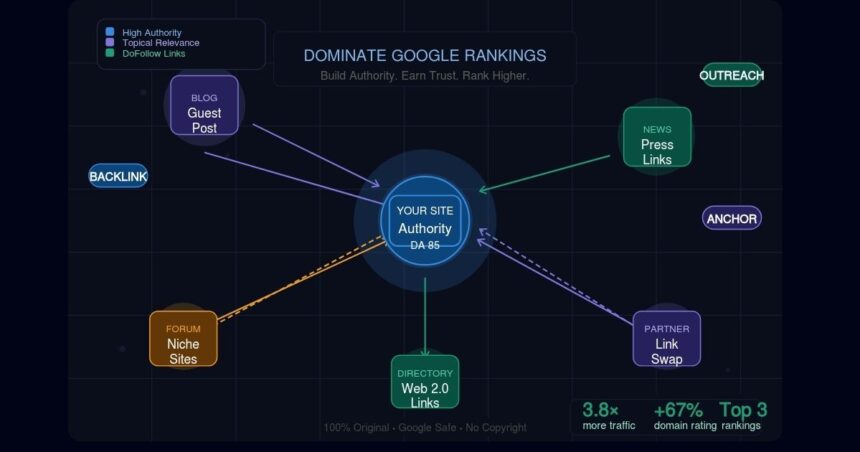
Link building is an essential SEO strategy that helps websites gain authority, improve search rankings, and attract more organic traffic through high-quality backlinks from trusted sources.
What Is Link Building in SEO?
Link building is the process of earning or acquiring hyperlinks from other websites that point back to your own site. These links are commonly called backlinks.
When another website links to your content, it is essentially saying: “This page is worth reading.” Search engines like Google have been using these signals since the very beginning, and despite every algorithm update, backlinks remain one of the strongest ranking signals in existence.
If ten people you have never met all tell you that a particular restaurant is excellent, you are far more likely to trust their recommendation than if one person told you the same thing. Google works the same way. The more high-quality websites that point to your pages, the more Google views your site as an authority worth ranking.
It is not just about quantity anymore. It never really was, but today, the quality, relevance, and context of each backlink matters far more than the total number of links you have. One link from a trusted industry publication can do more for your rankings than fifty links from random directories.
How Google Evaluates Backlinks
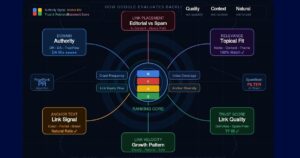
Google’s algorithm has become significantly more sophisticated. With the rollout of AI-assisted ranking systems and the continued evolution of its core algorithm, the way Google reads and values backlinks has changed in some important ways.
1. E-E-A-T Is Now Central to Link Value
Google’s concept of E-E-A-T — Experience, Expertise, Authoritativeness, and Trustworthiness — is now deeply tied to how it evaluates backlinks. A link carries much more weight when it comes from a site that itself demonstrates strong E-E-A-T signals.
This means that a backlink from a website written by verified experts in your field, with a clean history and genuine organic traffic, will have a significantly greater impact than a link from a site that was clearly built just to sell links.
2. Contextual Relevance Has Never Been More Important
Google’s natural language processing capabilities are advanced enough to understand the full context of a page. When a backlink exists inside content that is directly relevant to your topic, Google understands that the link is a genuine, meaningful endorsement.
If you sell software for project management, a backlink inside an in-depth article about productivity tools for remote teams carries far more value than the same link inside a food blog’s homepage sidebar.
3. Link Velocity and Natural Patterns
Google watches how your backlink profile grows over time. A sudden spike of hundreds of new backlinks in a short period looks unnatural and raises red flags. A steady, consistent growth of quality backlinks over months signals that your content is earning trust organically.
This is not a new concept, but it matters even more today because Google’s systems have become much better at detecting manipulation.
4. Branded Anchor Text Is a Trust Signal
For years, SEOs focused heavily on exact-match anchor text — getting other sites to link to you using your target keywords as the clickable text. While this still has value, over-optimizing your anchor text profile is risky.
Healthy backlink profile includes a natural mix of branded mentions (your website or brand name as anchor text), naked URLs, generic phrases like “read more,” and yes, some keyword-rich anchors. Natural diversity is the goal.
The Four Types of Links You Need to Understand
Before diving into strategies, let’s make sure you understand the different types of links that exist and which ones actually move the needle.
Follow Links (Dofollow)
These are the links that pass SEO value from the linking site to yours. When someone links to you without adding a special tag that tells Google to ignore the link, it is a follow link by default. This is the type you are trying to earn.
Nofollow Links
These contain a rel=”nofollow” tag that tells Google not to pass ranking credit. They can still send you traffic and build brand awareness, but they do not directly improve your rankings. Wikipedia links are a common example.
Sponsored Links
Links marked with rel=”sponsored” indicate that the link was paid for in some way. Google ignores these for ranking purposes. If you are paying for placements, make sure the publisher uses this tag — otherwise, you risk a penalty.
UGC Links
User-generated content links, marked with rel=”ugc”, appear in places like forum comments and blog discussions. These are also ignored by Google for ranking purposes. That does not mean you should avoid forums and communities, but do not count on those links for SEO value.
What Makes a Backlink Valuable
Not every link you earn will have the same impact. Here are the key factors that determine how much a backlink helps your site.
Domain Authority and Trust
Links from websites that Google already trusts and ranks well carry far more weight. A mention in a Forbes article, a link from a government education page, or a reference in a major industry publication will impact your rankings far more than links from newer or lower-authority sites.
That said, you do not need to only pursue high-authority links. A healthy backlink profile includes links from sites of all sizes. What you want to avoid is a profile that is exclusively built on links from low-quality or spammy sources.
Topical Relevance
A website that covers topics related to your business or industry will produce a more valuable backlink than a site that has nothing to do with your niche.
If you run a travel blog, links from other travel sites, tourism boards, hospitality businesses, and travel photographers all contribute to Google understanding that you are a respected voice in the travel space.
Link Placement on the Page
Where a link sits on a page matters. Links placed within the main body content of an article, especially in the early paragraphs, tend to carry more value than links buried in a footer, sidebar, or navigation menu. This is partly because links in the body are more likely to be clicked by actual readers, which Google takes into account.
Anchor Text Quality
The text that is hyperlinked matters. Descriptive, relevant anchor text helps Google understand what your page is about. “Best email marketing tools for small businesses” tells Google far more about your linked page than “click here” does. However, as mentioned earlier, your anchor text profile needs to look natural overall.
The Linking Page’s Own Authority
Even on a high-authority domain, some pages carry more weight than others. A page that itself has many backlinks pointing to it will pass more value to the pages it links to.
This is why a link in a popular, well-linked article is worth more than a link on an obscure, unvisited page of the same site.
9 Link Building Strategies:
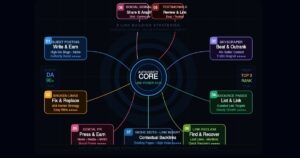
Now let’s talk about the actual tactics. These are not shortcuts. They are legitimate, sustainable strategies that build the kind of backlink profile Google rewards today and will continue to reward going forward.
1. Create Content Worth Linking To
This sounds obvious, but it is where most websites fall short. If your content does not provide something unique, original data, a comprehensive resource, an insightful analysis, a useful tool other websites have no real reason to link to it.
The types of content that consistently earn the most backlinks include original research and industry surveys, comprehensive guides that cover a topic more thoroughly than any competing page, interactive tools and calculators, visual assets like infographics and original data charts, and expert commentary on important industry trends.
When you publish content like this and promote it to the right people, links come naturally over time. This is the most sustainable form of link building because it creates a long-term asset that continues attracting links for years.
2. Strategic Email Outreach
You cannot just publish great content and wait. You need to let people know it exists. Email outreach remains one of the most effective ways to build backlinks, but only when done correctly.
The key in 2026 is relevance and personalization. Generic mass emails are immediately ignored or marked as spam. Before reaching out to a website owner or editor, research their site, understand what they write about, and think clearly about why your content would add value to their audience.
Your outreach message should be short, specific, and focused entirely on the benefit to them, not on what you need. Mention a specific article of theirs, explain precisely how your content relates, and make a direct but non-pushy request for a link or mention.
Sending fewer, better emails to highly relevant targets will always outperform mass outreach campaigns.
3. Become a Go-To Source for Journalists and Bloggers
Journalists, bloggers, and content creators are constantly looking for expert quotes, data, and insights to include in their articles. When you provide that, they often link back to you as the source.
Platforms that connect sources with journalists are still active in 2026 and work well for this purpose. You can also monitor social media, particularly X (formerly Twitter), for hashtags like #JournoRequest where journalists post in real time looking for expert input.
Participating consistently in this way builds both backlinks and genuine brand authority in your industry.
4. Broken Link Building
This strategy involves finding links on other websites that currently point to pages that no longer exist (404 errors), then suggesting your own relevant content as a replacement.
Website owners and editors appreciate being told about broken links because they want their sites to provide a good user experience. When you approach them with a solution already in hand, conversion rates are much higher than traditional cold outreach.
To find broken link opportunities, identify competitor sites in your niche and use SEO tools to find their pages with broken external links. Focus on broken pages that had many sites linking to them, as those represent the biggest opportunity.
5. The Skyscraper Method,
The original skyscraper technique involved finding popular content in your niche, creating something significantly better, then reaching out to everyone linking to the original piece.
This approach has evolved. It is not enough to simply write a longer article. You need to genuinely improve on the content in ways that matter: more recent data, better organization, additional insights that the original missed, embedded tools or calculators, expert contributions, or better visual explanations.
When your version genuinely serves readers better, and you can clearly articulate why, you have a compelling case to make when reaching out.
6. Digital PR and Newsworthy Campaigns
Digital PR involves creating content or campaigns that are genuinely newsworthy, then distributing press releases and pitching journalists to cover the story.
When journalists write about your campaign, they typically include a backlink to your site. Done well, a single digital PR campaign can earn dozens of high-authority links from major publications in a short period.
The key is creating a story that is genuinely interesting and relevant to a broad audience. Data-driven reports on surprising industry trends, creative campaigns tied to current events, charitable initiatives, and research that challenges common assumptions all tend to perform well.
7. Reclaim Your Lost Backlinks
Before building new links, check whether you have lost any valuable links you already had. Pages get deleted, websites get redesigned, and links sometimes disappear for no obvious reason.
Using backlink monitoring tools, you can see exactly which links you have lost over time. In many cases, a brief, polite email to the site owner asking them to restore the link is all it takes. Because you already had the link, this is much easier than building a new one from scratch.
8. Competitor Backlink Analysis
Every website competing with you for rankings has a backlink profile you can study. If a site is willing to link to your competitor’s content on a particular topic, there is a reasonable chance they would also link to your content — especially if yours is better.
Review the backlink profiles of your top competitors, identify the sites linking to them, and reach out to those sites with your own relevant content. This is one of the most reliable ways to find qualified link prospects who are already open to linking to content like yours.
9. Build Genuine Relationships in Your Industry
This is the strategy that most SEO articles skip because it does not scale as quickly as outreach tools and bulk prospecting. But it is genuinely one of the most powerful long-term approaches.
When you participate in industry events, contribute to conversations on professional platforms, collaborate on content with other creators in your space, and build real professional relationships over time, backlinks tend to follow naturally.
People link to sources they know and trust. When you are known in your industry as someone who produces high-quality work and contributes genuine value to the conversation, earning links becomes significantly easier.
Link Building Mistakes to Avoid in 2026
Understanding what not to do is just as important as knowing the right strategies. Here are the mistakes that continue to damage websites every year.
Buying links without disclosure. Paying for backlinks that do not carry the rel=”sponsored” tag is a direct violation of Google’s guidelines. If you are caught — and Google has become very good at identifying paid link schemes — the penalties can devastate your rankings.
Using private blog networks. PBNs are networks of websites created specifically to sell backlinks. Google targets these aggressively, and sites using them regularly face severe penalties.
Over-optimizing anchor text. If a suspiciously high percentage of your backlinks use exact-match keywords as anchor text, it looks manipulative. Google will discount those links at best and penalize your site at worst.
Pursuing irrelevant links. A high-authority link from a website that has nothing to do with your topic provides far less value than a moderate-authority link from a directly relevant source. Chasing authority score without considering relevance is a common mistake.
Ignoring toxic links. If your backlink profile contains a significant number of spammy, low-quality links particularly if they were built by a previous SEO, they can actively harm your rankings. Regular audits and the Google disavow process exist for exactly this reason.
How AI Is Changing Link Building
Artificial intelligence is reshaping nearly every part of digital marketing, and link building is no exception. Here is what you need to understand.
AI tools are now being used to analyze backlink profiles at scale, identify high-quality link prospects automatically, and even assist in personalizing outreach emails. This makes the research and prospecting phase faster and more efficient than it has ever been.
At the same time, AI-generated content is flooding the internet, and Google is actively working to filter it out. This creates an important opportunity: websites that produce genuinely human, experience-backed, expert-level content will stand out more than ever, and they will earn more natural backlinks as a result.
The human element, real expertise, genuine relationships, original research, and authentic storytelling — is becoming more valuable, not less, even as AI tools become more capable.
For link building specifically, AI assists with the analytical and logistical side: finding opportunities, tracking progress, and scaling outreach. But the quality of what you are promoting, and the quality of the relationships you build, will always be the determining factors in whether your link building actually works.
How to Measure Your Link Building Results
Building links without tracking results is like running a business without looking at your finances. You need to know what is working.
The key metrics to monitor include the number of new referring domains over time (unique websites linking to you), changes in your domain authority or authority score, movement in your target keyword rankings, and changes in your organic search traffic.
Set up a regular schedule — monthly at minimum — to audit your backlink profile. Look for new links earned, links recently lost, and any potentially harmful links that need to be addressed.
Tie your link building activity back to actual ranking improvements. If a specific type of content or outreach approach is consistently earning high-quality links and improving rankings, do more of it. If another approach is consuming time without producing results, cut it.
Building a Long-Term Link Building Strategy
The websites that dominate search results in 2027 will not be the ones that chased every new trend or tried to game the algorithm. They will be the ones that consistently did the fundamentals well: created genuinely useful content, earned links from relevant and trusted sources, maintained a clean backlink profile, and built real authority in their industries.
Link building has always been a long game. The timelines have not changed. It takes months of consistent effort to see meaningful movement in authority and rankings. But the websites that commit to this process and stay patient see compounding returns over time that are extremely difficult for competitors to replicate.
If you are starting your link building efforts today, focus first on creating at least two or three genuinely excellent pieces of content in your niche — pieces that you can confidently say are better than what currently ranks. Then begin systematic outreach using the strategies covered in this guide.
Start building relationships with others in your industry. Contribute original insights to conversations where journalists and bloggers can find you. Audit and reclaim any lost links you may have. Study your competitors and target the same sites that are already linking to them.
Final Thoughts
Link building in 2026 is more nuanced than it was five or ten years ago. The shortcuts that used to work have been closed off, the standards for what constitutes a quality backlink have risen, and the competition for earned placements is more intense than ever.
But the core principle has not changed at all: websites that are genuinely useful, genuinely authoritative, and genuinely connected within their industries earn more backlinks and rank better. That has been true since the beginning of search, and it will remain true long into the future.