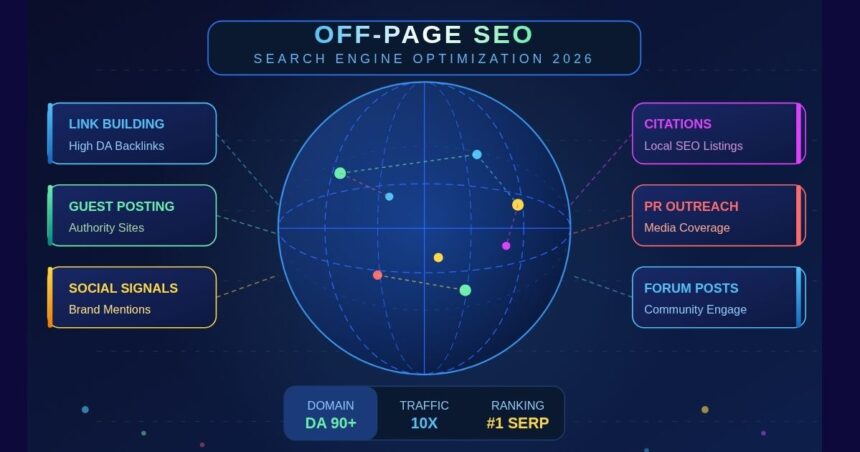
Learn off-page SEO techniques to improve your website’s unpaid search engine rankings. Discover effective link building, brand mentions, and other off-page SEO strategies
For a long time, the entire conversation around off-page SEO was about backlinks. Get more links. Get links from high-authority domains. Track your domain rating. Repeat. The advice was not wrong backlinks still matter enormously, but it was dangerously incomplete.
Off-page SEO is about how your entire digital presence looks from the outside. It is about brand authority, trust signals, expert credibility, community recognition, digital PR, and yes, still backlinks. But those backlinks now need to exist within a broader ecosystem of genuine reputation before they carry their full weight.
Google’s AI systems have become sophisticated enough to evaluate not just whether you have links, but whether your brand is genuinely recognized and trusted across the web. Sites that earn that recognition rank well and hold their positions through algorithm updates. Sites that only chase links without building real authority see diminishing returns.
What Is Off-Page SEO?
Off-page SEO refers to every action you take outside of your own website that influences how search engines perceive your site’s authority, credibility, and relevance.
On-page SEO is about what lives on your website — your content, title tags, headings, page speed, and internal links off-page SEO is about your reputation across the rest of the internet.
On-page SEO is your resume. It tells search engines what you know and what you can do. Off-page SEO is your references. It tells search engines whether other credible people and organizations in your industry trust and respect your work.
Google has always relied on external signals to evaluate sites because they are harder to fake than on-page signals you control completely. If a thousand websites in your niche independently reference your content, that is a much stronger quality signal than anything you could write about yourself.
Off-page SEO includes:
- Backlinks from external websites
- Brand mentions, with or without a hyperlink
- Digital PR and media coverage
- Social media signals and engagement
- Online reviews and reputation management
- Podcast appearances and interview features
- Influencer collaborations and partnerships
- Forum and community participation
- Local citations and Google Business Profile signals
- Entity recognition and knowledge panel presence
- AI visibility and citation in AI-generated answers
Each of these contributes to how Google and other search engines perceive your site’s standing in your industry. Together, they build the kind of off-page authority that sustains strong rankings long-term.
Why Off-Page SEO Matters More Than Ever
AI-powered search makes off-page SEO less relevant. If Google can understand content directly through AI, why would it need external signals to evaluate quality?
The answer is that external signals are precisely how Google validates what it finds on your site. Any website can claim to be an expert. Not every website earns recognition from other experts in the field. That difference is what off-page SEO measures.
Off-page authority also directly influences whether your content gets cited in AI Overviews, referenced by ChatGPT, or surfaced by Perplexity. Research shows that the top sources cited in AI-generated answers are consistently brands with strong off-page presence — entities that appear repeatedly across authoritative publications, industry discussions, and trusted platforms.
A wide range of publications can increase AI citation rates by up to 325 percent compared to publishing content only on your own site.
That is a massive difference, and it is entirely an off-page outcome.
The sites winning in search right now are not the ones with the cleanest title tags. They are the ones that are genuinely well-known and well-respected in their fields, with a backlink profile and brand presence that reflects that recognition.
Off-Page SEO vs On-Page SEO: Understanding the Difference
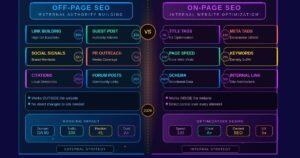
Before diving into strategies, it is worth being clear about how off-page and on-page SEO relate to each other.
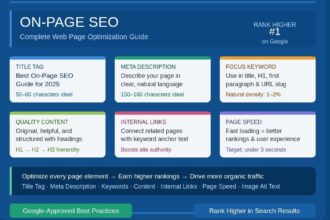
On-page SEO covers everything on your website that you directly control: content quality, keyword optimization, title tags, meta descriptions, heading structure, URL structure, image optimization, internal linking, page speed, mobile friendliness, and structured data.
Off-page SEO covers everything outside your website that signals authority and trust to search engines: backlinks, brand mentions, media coverage, reviews, social signals, and community presence.
Technical SEO is a third category that overlaps with both it covers the infrastructure of your site including crawlability, indexability, site architecture, and security.
All three work together. Strong on-page SEO without off-page authority means a well-written, well-optimized site that nobody else endorses. Strong off-page authority without good on-page SEO means a well-known site that does not serve its visitors effectively. The combination of all three is what produces sustained top rankings.
Four Pillars of Off-Page SEO
Modern off-page SEO organizes around four core pillars. Understanding each one helps you build a strategy that is comprehensive rather than relying too heavily on any single approach.
1: Link Authority
Backlinks remain the most powerful off-page signal. When a trusted website links to yours, it passes a portion of its authority to your page. This directly influences how Google assesses your site’s credibility for relevant search queries.
That link quality now matters dramatically more than link quantity. A single contextual backlink from a well-regarded industry publication can do more for your rankings than fifty links from low-quality directories. Google’s systems have become increasingly good at distinguishing genuine editorial links from links that were manipulated or purchased.
2: Brand Authority
Brand authority encompasses how well your brand is recognized and discussed across the web, even in contexts where no hyperlink is present. Google uses natural language processing to associate brand mentions with your site, and consistent recognition across trusted platforms strengthens your overall authority signal.
The fastest-growing areas of off-page SEO. Sites that actively build brand presence across publications, podcasts, video platforms, and industry communities are more resistant to algorithm updates because their authority is diversified across multiple signal types.
3: Trust and Reputation Signals
Trust signals include reviews, ratings, verified business information, and consistent presence across reputable platforms. These signals tell both Google and potential visitors that your business or website is legitimate, reliable, and accountable.
In the context of Google’s E-E-A-T framework — Experience, Expertise, Authoritativeness, and Trustworthiness — trust signals have grown in importance with every algorithm update. A site with strong reviews, verified author credentials, and consistent business information across the web is treated differently than an anonymous site with no external validation.
4: Entity Recognition
Entity recognition is the most technical of the four pillars, but understanding it is increasingly important. Google maintains a knowledge graph — a massive database of entities (people, places, organizations, concepts) and the relationships between them.
When Google recognizes your brand as a defined entity in its knowledge graph, you gain significant advantages in how your site is evaluated and displayed.
Building entity recognition involves ensuring your brand is consistently mentioned across authoritative platforms, your structured data accurately describes your organization, and your digital footprint across the web is coherent and verifiable.
Backlinks: Still the Foundation, But the Rules Have Changed
Backlinks are the original off-page ranking signal and they remain the most direct way to build page-level authority. But how you approach link building in 2026 needs to reflect the significant changes that have taken place in how Google evaluates them.
What Makes a Backlink Valuable Today
Relevance comes before authority. A link from a moderately authoritative site in your exact niche is more valuable than a link from a high-authority site in a completely unrelated field. Google’s contextual understanding is strong enough to evaluate whether a link makes logical sense given the topics of both the linking page and the page being linked to.
Placement in the body content matters. Links embedded naturally within the main text of an article carry more weight than links in footers, sidebars, author bios, or navigation menus. Google’s evaluation of link placement is sophisticated enough to distinguish between a link that was genuinely included because it adds value to the reader and a link that was inserted to manipulate rankings.
Anchor text must be natural and varied. Your backlink profile should include a natural mix of branded anchor text (your brand name), naked URLs, generic phrases, and some keyword-relevant anchors.
Over-optimized anchor text — where most of your links use exact-match keywords as the clickable text — is a red flag that triggers scrutiny and can result in those links being discounted or penalized.
The linking page’s own authority matters. A link from a page that itself has many high-quality links pointing to it passes more ranking value than a link from a page that nobody else has linked to, even if both pages are on the same domain.
Links from new, unique domains matter more than multiple links from the same domain. The first link you earn from a referring domain is the most valuable. Additional links from that same domain provide diminishing returns. This is why growing your number of unique referring domains is a better measure of link building progress than tracking total backlinks.
The Types of Links Worth Pursuing
Editorial links are the gold standard. These are links earned because a journalist, blogger, or content creator decided your resource was genuinely worth referencing. They are the most trusted signal because they represent a free choice made by an independent third party.
Guest post links remain valuable when placed on genuine, high-quality publications that have real audiences and editorial standards. The distinction between legitimate guest posting and link scheme guest posting comes down to whether the publication has value independent of the links it provides.
Digital PR links come from news coverage, brand features, and media mentions. These tend to come from high-authority domains and are among the most powerful links you can earn. A story covered by a major publication creates links that carry significant ranking impact.
Resource page links come from pages that curate useful tools, guides, or references in a particular niche. Being included on a well-maintained resource page in your industry is a reliable, sustainable source of relevant backlinks.
Broken link replacements involve finding broken links on authoritative sites in your niche and offering your own content as a replacement. Because the site owner already wanted to link to content on that topic, your outreach has a practical benefit for them — making conversion rates significantly higher than cold outreach.
Links to Avoid
Purchased links: links where money changed hands without the use of a rel=”sponsored” tag — violate Google’s guidelines and are targeted by its spam detection systems. They may show short-term ranking gains but create long-term risk that is not worth taking.
Private blog network links: links from networks of websites built specifically for the purpose of selling backlinks — are identified and discounted by Google regularly. Sites using them face penalties that can take months or years to recover from.
Low-quality directory links: submitting to hundreds of generic web directories that have no editorial standards and no real audience — provide no meaningful SEO value and contribute to a spammy-looking backlink profile.
Reciprocal link exchanges at scale — arrangements where Site A links to Site B in exchange for Site B linking back — are flagged as manipulative when done systematically. Natural, occasional reciprocal links between genuinely related sites are fine.
The Off-Page Signal Most Sites Ignore
Brand mentions are exactly what they sound like: any time another website, publication, or platform references your brand name, website, or key personnel, whether or not they include a hyperlink.
Brand mentions are recognized as a significant off-page signal in their own right. Google uses natural language processing to read content across the web and understand which brands are being discussed in which contexts. Consistent, positive mentions on authoritative sites strengthen your brand entity in Google’s knowledge graph and contribute to overall authority.
Unlinked mentions are worth converting. When a site mentions your brand without linking to it, that is an easy win waiting to happen. Reach out politely to the author or site owner, point out the mention, and ask whether they would be willing to add a link. Because they already thought highly enough of your brand to mention it, conversion rates on these requests tend to be much higher than cold outreach for brand-new links.
The authority of the mentioning site matters. A brand mention in a Forbes article or a well-regarded industry blog carries more weight than a mention in a low-traffic, unknown publication. Focus your reputation-building efforts on earning mentions from sources that themselves have strong authority and real audiences.
Context matters as much as the mention itself. A brand mention within a piece of content that is topically relevant to your business is more valuable than a mention in an unrelated context. Being referenced in an industry discussion as an expert in your field creates a much stronger authority signal than being mentioned casually in a completely unrelated piece.
Track your mentions consistently. Use monitoring tools to watch for brand mentions across the web in real time. When you find mentions, engage positively, note which mentions have links and which do not, and prioritize outreach for the highest-authority unlinked mentions first.
Digital PR: The Most Powerful Off-Page Strategy of 2026
Off-page SEO strategy that deserves more attention from more websites, it is digital PR. No other approach combines the authority of editorial backlinks, the amplification of brand mentions, and the trust signals of genuine media coverage in a single effort.
Digital PR involves creating stories, research, campaigns, or assets that are genuinely newsworthy — interesting enough that journalists and editors at real publications choose to cover them. The coverage earns backlinks, brand mentions, and media authority simultaneously.
What Makes a Good Digital PR Campaign
Original data and research consistently earn the most coverage. If you can conduct a survey, analyze an industry dataset, or publish findings that nobody else has reported, journalists have a clear reason to cover your story. The more surprising or counterintuitive the findings, the wider the coverage tends to be.
Reactive commentary and expert opinions earn faster coverage. When a major news story breaks in your industry, being one of the first credible sources to offer an expert perspective gives journalists a reason to quote you. This requires monitoring industry news closely and having a clear process for getting expert commentary in front of journalists quickly.
Creative campaigns tied to cultural moments generate coverage when they feel timely, relevant, and genuinely interesting. The key is finding an angle that connects your brand’s expertise to something people are already paying attention to.
Free tools, calculators, and resources earn consistent long-term coverage because they provide ongoing utility. If you build a tool that your target audience genuinely uses, other sites will continue linking to it and mentioning it for years after the initial launch.
How to Distribute Digital PR Campaigns
Creating a newsworthy asset is only half the work. Getting coverage requires active, targeted outreach to journalists and publications that cover your industry.
Build a targeted media list of journalists, editors, and publications that regularly cover topics in your niche. Personalize your outreach, reference specific articles they have written, explain precisely why your story is relevant to their audience, and make it as easy as possible for them to cover it by providing all the information they need in a single, well-organized email.
Most journalists receive hundreds of pitches per week. A single, professional follow-up after three or four business days is appropriate. Multiple aggressive follow-ups damage your reputation with the journalists you most need to reach.
Social Signals: Indirect but Meaningful
Social media signals: shares, likes, comments, and overall engagement — are not direct ranking factors in Google’s algorithm. Google has been clear that it does not use Twitter or Facebook likes as ranking signals in the traditional sense.
Social signals have a meaningful indirect effect on off-page SEO, and dismissing them entirely misses the point.
Content that performs well on social media gets discovered by more people, including bloggers, journalists, and content creators who might link to it. Every share is a potential discovery moment that could result in a backlink.
Social media profiles on major platforms rank in Google searches. When someone searches for your brand name, your Twitter, LinkedIn, YouTube, and Facebook profiles often appear in the results alongside your website. A strong social presence controls more of that branded search real estate and contributes to a positive first impression.
Engagement builds community, and communities create the kind of sustained brand recognition that feeds into off-page authority over time. People who engage with your content on social platforms are more likely to share it, link to it, and mention your brand in the contexts that matter for SEO.
Platform-specific content creates backlink opportunities. A video on YouTube that performs well can earn links from sites that embed or reference it. An infographic shared on Pinterest or Instagram can earn links from bloggers who use it in their own content. Treat social media as a distribution mechanism for content that earns links, not just a separate channel.
Online Reviews: Trust Signals Google Takes Seriously
Online reviews have emerged as a significant off-page trust signal, and the data from 2026 makes this clear. Research shows that review profiles correlate with significantly higher AI citation rates across all platforms, verticals, and brand sizes.
For local businesses, Google Business Profile reviews are among the most important off-page signals you can build. For online businesses, review presence on relevant platforms — whether that is Trustpilot, G2, Capterra, or industry-specific review sites — contributes to both trust signals and brand visibility.
Reviews contribute to E-E-A-T signals. A site or brand that has accumulated genuine reviews from real customers demonstrates a history of real-world interaction and accountability. This is something Google values because it is difficult to fake at scale.
Responding to reviews matters. Actively engaging with reviews, thanking positive reviewers, professionally addressing negative ones, demonstrates the kind of responsiveness and accountability that search engines associate with legitimate, trustworthy businesses.
Volume and recency of reviews both matter. A steady flow of recent reviews signals an active, relevant business. A large volume of old reviews that stopped suddenly looks suspicious. Encourage satisfied customers to leave reviews consistently over time rather than trying to generate a surge in a short period.
How to encourage more reviews: Ask at the right moment — after a successful interaction, completed purchase, or positive service experience. Make it easy by sending a direct link to your review platform. Train your team to mention reviews naturally in follow-up communications. Never incentivize reviews with discounts or gifts, as this violates most platforms’ guidelines and creates the appearance of manipulation.
Forum and Community Participation
Forums, online communities, Q&A platforms, and niche discussion groups offer off-page SEO value when approached with the right mindset. The wrong mindset is treating these spaces as link directories where you drop your URL and move on. That approach generates no value and often gets accounts banned.
The right mindset is genuine participation. Contribute real answers to real questions. Share expertise that helps other community members. Build a reputation as a knowledgeable contributor in your niche. When your profile is trusted and your contributions are genuinely useful, any links to your content feel natural and are more likely to drive real traffic.
Reddit, despite not passing direct SEO link value, is increasingly influential. Reddit discussions frequently appear in search results, and content that earns genuine organic discussion on Reddit gains visibility among exactly the kind of engaged, knowledgeable audience most likely to create real backlinks.
Quora remains a platform where well-written answers on relevant topics can generate lasting referral traffic and contribute to brand visibility in search results.
Industry-specific forums and Slack communities are often overlooked but can be highly valuable. A contribution in a well-regarded community of professionals in your niche reaches exactly the people most likely to link to your content from their own sites and publications.
Podcast Appearances and Thought Leadership Features
One of the most underused off-page strategies for building genuine authority is appearing as a guest on podcasts and in expert roundup features. This approach creates multiple off-page benefits simultaneously.
Podcast appearances generate backlinks. Most podcast shows create show notes pages that link to guests and the resources they mention. A single podcast appearance can earn links from a domain with a dedicated, engaged audience in your niche.
Podcast mentions are brand signals. When a host introduces you as an expert and discusses your work with their audience, your brand is being mentioned in an authentic, authoritative context. These mentions contribute to entity recognition.
Expert roundups and Q&A features in industry publications work the same way. A quote from your team featured in a respected publication builds both links and the kind of contextual brand mentions that strengthen off-page authority.
Speaking engagements, whether in-person at conferences or online through webinars, generate coverage and links from event pages, write-ups, and participant blogs. In 2026, verified speaking engagements and published expert contributions are among the highest-weight authority signals in Google’s ranking evaluation.
Local Off-Page SEO: What Changes When You Serve a Specific Area
If your business serves customers in a specific location, off-page SEO requires an additional layer of strategy focused on local authority signals.
Google Business Profile is your anchor. Keep your business name, address, phone number, hours, and category information accurate and complete. Regularly add photos, respond to reviews, and use posts to share updates. Your Business Profile is a central entity in Google’s understanding of your local relevance.
NAP consistency is non-negotiable.
NAP stands for Name, Address, and Phone number. These three details must be identical across every platform where your business appears’ https://websiteauthority.org/, Google Business Profile, Yelp, Facebook, industry directories, and local listings. Any discrepancy creates a trust conflict that weakens your local ranking signals.
Local citations build geographic relevance. Citations are mentions of your business on local or industry directories, local news sites, and community platforms.
The more authoritative and locally relevant the citing platform, the stronger the signal. Getting featured in local newspaper digital editions, community business directories, and regional industry associations all contribute to local off-page authority.
Local link building targets geographically relevant sources. Links from local newspapers, regional business associations, local event sites, and community organizations carry strong local relevance signals that improve rankings for location-based searches.
The New Off-Page Frontier
Google’s AI Overviews, ChatGPT, Perplexity, and similar tools — has created an entirely new dimension of off-page SEO: AI visibility.
When users ask AI systems questions, those systems pull their answers from sources across the web. The sources they cite tend to be authoritative, well-known brands with a strong off-page presence. If your brand is consistently mentioned in the authoritative publications and platforms that AI systems trust, your chances of being cited in AI-generated answers increase significantly.
This makes off-page authority directly relevant to AI visibility.
Sites that have built genuine editorial links, earned media mentions across trusted publications, and established consistent brand recognition across the web are far more likely to be cited in AI answers than sites that have focused only on on-page optimization.
publications matters more than it ever has. According to research from late 2025, the top sources cited by AI systems include recognized, high-authority publications in each niche. Being mentioned — even without a hyperlink — in these publications creates an entity association that AI systems use when constructing answers.
Distributing your content broadly is a compounding investment. Content that appears only on your own site has limited AI citation potential. Content that is referenced, summarized, and discussed across multiple authoritative platforms has a much greater chance of being surfaced in AI answers because it appears in the training data and reference pools that AI systems draw from.
Schema markup supports entity recognition in AI search. Accurate structured data on your site helps AI systems understand exactly who you are, what your brand represents, and how to categorize your expertise. Combined with strong off-page signals, this creates a clear, verifiable entity that AI systems can confidently cite.
Measuring Off-Page SEO: Metrics That Actually Matter
Off-page SEO is slower to show results than on-page changes, but tracking the right metrics ensures you can see progress and allocate effort to what is working.
Referring domain: The number of unique websites that link to your site — is the most important backlink metric to track. Growth in referring domains over time indicates that your content and outreach are earning new links from new sources.
Domain authority or authority score: The composite metric your SEO tools use to estimate your site’s overall link authority: moves slowly but reflects the cumulative impact of your off-page work. Expect meaningful changes over months, not days or weeks.
Organic search traffic: The most direct measure of whether your off-page efforts are translating into search visibility. Set up Google Search Console and track traffic trends over rolling 90-day periods to see the true direction of your performance.
Brand mention volume: Track how often your brand is mentioned across the web using monitoring tools. Growth in brand mentions, particularly on authoritative platforms, reflects the expanding recognition that strengthens your overall off-page profile.
AI citation frequency: Emerging tools in 2026 now allow you to track how often your brand or content is cited in AI-generated answers across major platforms. This is becoming an increasingly important metric as AI search features grow in prominence.
Review quantity and sentiment: Track the number of reviews you accumulate over time and the average sentiment. These trust signals contribute to both local and general off-page authority.
Set up monthly reporting across these metrics. Off-page authority builds gradually, and regular tracking makes the progress visible and keeps your strategy focused on what matters.
Complete Off-Page SEO Checklist
Use this checklist as a practical reference for building and maintaining your off-page strategy.
Backlink Building
- Identify your top ten competitors’ backlink profiles and note which sites link to them
- Create at least one major linkable asset per quarter (original research, in-depth guide, or useful tool)
- Set up a systematic email outreach process for relevant link prospects
- Monitor and reclaim lost backlinks regularly
- Pursue digital PR opportunities for high-authority editorial links
- Review your backlink profile monthly for potentially harmful links
Brand Mentions and Reputation
- Set up brand mention monitoring to catch all references in real time
- Identify and reach out to convert unlinked mentions into backlinks
- Contribute expert quotes and commentary to industry publications
- Seek guest post opportunities on genuine, high-quality publications
- Monitor your brand’s overall sentiment across platforms
Reviews and Trust
- Maintain a consistent, accurate NAP across all platforms
- Optimize and regularly update your Google Business Profile
- Develop a process for consistently encouraging customers to leave reviews
- Respond professionally to all reviews, positive and negative
- Build presence on relevant review platforms for your industry
Social and Community
- Maintain active, consistent presence on platforms relevant to your audience
- Participate genuinely in industry forums and communities
- Engage with other creators and publications in your niche
- Share your content strategically across social channels to maximize discovery
Thought Leadership and Digital PR
- Pitch podcast guest appearances in your niche
- Contribute to expert roundups and industry Q&A features
- Speak at virtual or in-person industry events when possible
- Create a media kit that makes it easy for journalists to feature your brand
- Build relationships with journalists in your niche over time
AI Visibility
- Distribute original content across multiple authoritative platforms
- Implement accurate schema markup for your organization and key content
- Build your entity presence through consistent, verifiable brand information
- Monitor AI citation tracking tools for your brand’s citation frequency
Off-Page SEO :
Looking ahead, the trajectory of off-page SEO is clear and the core direction has been consistent for several years.
Brand signals will continue to grow in importance. Google has repeatedly signaled through its updates and documentation that brand recognition is a significant quality indicator. Sites with established brand authority are more resistant to algorithm volatility. Building genuine brand presence is both an SEO strategy and a business strategy.
AI citation optimization will become a formal discipline. As AI-powered search features grow in prominence, optimizing for citation in AI answers will develop into a defined sub-field of off-page SEO. The underlying requirements authority, trustworthiness, comprehensive coverage, and entity clarity — overlap closely with traditional off-page signals, meaning investment in quality off-page strategy now builds AI visibility simultaneously.
Editorial quality will determine link value more precisely. Google’s ability to distinguish between genuine editorial links and manufactured ones will continue to improve. The long-term value of investing in content and relationships that earn real editorial links will only increase as manipulation becomes harder.
Diversified off-page presence will be the resilience strategy. Websites that build authority through multiple off-page channels, backlinks, brand mentions, reviews, digital PR, social presence, and expert credibility are less vulnerable to any single algorithm change than sites that rely heavily on one tactic. Diversification is both good practice and good risk management.
Bringing It All Together
Off-page SEO is not a collection of tricks for convincing Google that your site is better than it actually is. It is the natural result of building something that genuinely deserves recognition in your field.
The sites that rank best in 2026 and will continue to rank best through 2027 are sites that have invested consistently in creating content worth linking to, building relationships with others in their industries, earning genuine media recognition, and establishing a trustworthy presence across every relevant platform.
The technical side tracking backlinks, monitoring brand mentions, managing your review profile, optimizing structured data for entity recognition makes that investment visible to search engines and gives you control over how it compounds over time.