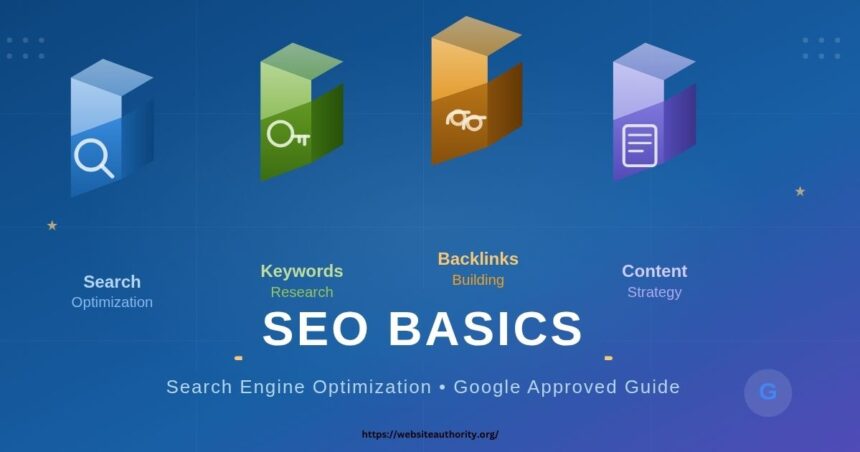
Search engine optimization sounds complicated. It isn’t not once you understand what it actually is and why it matters.
Whether you’re starting a blog, running a local shop, or building an online brand, SEO is the one strategy that keeps working long after you’ve stopped paying for ads.
Search engines are how people find everything online, and SEO is how your website gets found. If you’ve ever wondered why some websites always appear at the top of Google while others stay buried on page five, the answer is simple: they understand SEO basics and you don’t yet.But that’s about to change.
SEO, or Search Engine Optimization, is the process of making your website more visible to people who are actively searching for what you offer. It’s not about tricking Google — it’s about giving Google exactly what it wants: helpful content, fast pages, and a trustworthy website.
The good news? You don’t need to be a tech expert to get started. Whether you’re running a small blog, a local business, or an online store, learning the basics of SEO can completely transform how much free traffic your website receives every single day.
What Is SEO? SEO Basics
SEO stands for Search Engine Optimization. It’s the process of making your website more visible in search results on Google, Bing, and other search engines and increasingly, in AI-powered tools like ChatGPT, Gemini, and Perplexity.
Someone types a question into Google, a list of results appears. SEO is what determines whether your website shows up in that list, or gets buried on page five where nobody looks.
But modern SEO isn’t just about getting clicks. It’s also about appearing in featured snippets, AI summaries, and knowledge panels, all the places people now discover information online.
Why Does SEO Matter for Your Business?
Here’s a simple reality: people are searching for what you offer, every single day. If your website doesn’t appear when they search, a competitor’s will.
SEO puts your business in front of people at the exact moment they’re looking for answers. That’s a huge advantage over cold advertising, where you’re interrupting someone who may have no interest in what you’re selling.
There’s another reason SEO matters: it compounds over time. A well-optimized article you publish today can bring in visitors consistently for years. Paid ads stop the moment you stop paying. Organic search traffic doesn’t work that way.
To put this in perspective: some websites receive millions of monthly visitors from organic search alone. Replicating that kind of traffic through paid ads would cost millions of dollars per month. Strong SEO builds lasting, compounding value — and that’s worth understanding no matter what stage your business is at.
The 5 Core Steps of SEO
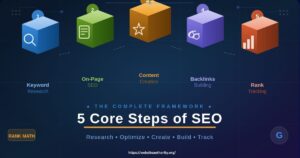
Every SEO strategy, no matter how advanced, comes down to five fundamentals. Master these and you’ll be ahead of most websites on the internet.
1. Keyword Research
Keyword research is figuring out what words and phrases your audience actually types into search engines and what questions they ask AI assistants.
You want to target topics that:
- Your audience genuinely searches for
- Relate directly to what you offer
- You can realistically compete for
Good keyword research is about understanding your audience’s language, not just hunting for high-volume search terms. Think about the questions they ask, the problems they want to solve, and the exact phrases they’d use.
2. Content Creation
Once you know what people are searching for, you create content that answers those searches better than anyone else.
The key word here is helpful. Google’s algorithms are increasingly good at recognizing content that genuinely serves readers versus content that’s stuffed with keywords but offers little value. Write like a knowledgeable human explaining something to another human. Cover topics in depth. Answer follow-up questions before they’re asked.
Trust matters too. Show who you are. Link to credible sources. Keep your information accurate and up to date.
3. On-Page SEO and Structure
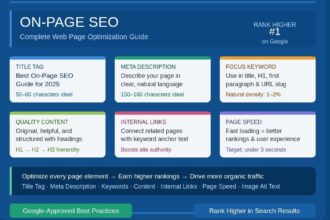
On-page SEO means optimizing each individual page so that both users and search engines can easily understand what it’s about.
This includes:
- Using your target keyword naturally in titles, headings, and early in the text
- Writing clear, descriptive meta descriptions
- Using proper heading structure (H1, H2, H3)
- Adding internal links to connect related pages on your site
- Including structured data where relevant ( FAQ schema or product markup)
The goal is to make your content scannable for humans and machine-readable for search engines and AI crawlers.
4. Links and Mentions
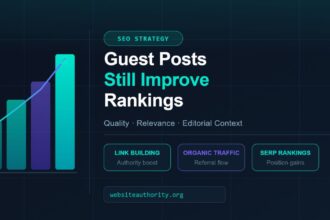
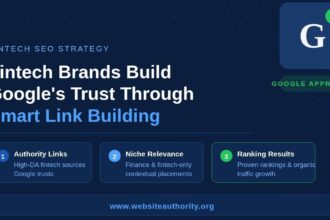
Search engines judge your website’s authority partly by who links to you. A backlink from a reputable, relevant website signals to Google that your content is trustworthy.
Beyond backlinks, brand mentions across the web — even without a link — contribute to how search engines and AI tools perceive your authority. Reviews, citations in directories, and being mentioned in relevant online communities all play a role.
Building links takes time and effort. Focus on creating content worth linking to, and build genuine relationships in your industry. Shortcuts tend to backfire.
5. Technical SEO
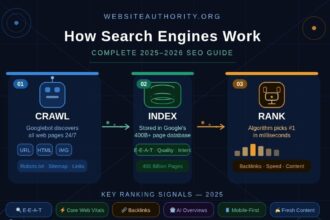
Technical SEO ensures that search engines — and increasingly, AI crawlers — can actually find, crawl, and index your content.
Key elements include:
- Fast page load speeds
- Mobile-friendly design
- A clear, logical site structure
- An XML sitemap submitted to Google Search Console
- A properly configured robots.txt file
- HTTPS encryption across your entire site
Technical issues are often invisible to users but can severely limit how well your pages rank. Even excellent content struggles to rank if search engines can’t properly access or understand it.
What Are the Benefits of SEO?
People Find You When They’re Already Looking
- This is the biggest one, and it’s worth slowing down to appreciate.
With traditional advertising, Facebook ads, billboards, TV commercials, you’re pushing your message at people who may or may not care. You’re interrupting them. Most of the time, they ignore it. - SEO works completely differently.
- When someone types “best running shoes for flat feet” or “affordable plumber near me” into Google, they’re not being interrupted. They’re actively looking for an answer. They want to find something. They’re ready to engage, buy, or book.
- SEO puts your website in front of those people, at exactly the right moment.
- That kind of timing is incredibly powerful, and it’s something paid ads can’t fully replicate.
It Brings in Traffic Without Paying Per Click
Every time someone clicks on a paid ad, money leaves your account. Stop paying, and the traffic stops immediately.
Organic SEO doesn’t work that way.
Once your website ranks well for a keyword, it keeps bringing in visitors — day after day, month after month without you spending anything on that specific click. You put in the work once, and it keeps paying off.
Yes, SEO takes time and effort upfront. But the return compounds over time in a way that paid advertising simply cannot match.
Some businesses receive millions of monthly visitors purely from organic search. Replicating that volume through paid ads would cost an absolutely staggering amount of money every single month. SEO makes that kind of visibility achievable, without a massive advertising budget.
Builds Real Trust and Credibility
When you search for something and click on the first result, you probably feel some level of trust before you even read the page. If Google is showing it at the top, it must be good right?
That’s exactly how your customers think too.
Ranking highly in search results signals authority. It tells people that your website is credible, that your content is trustworthy, and that your business is worth taking seriously.
This credibility is hard to fake and even harder to buy. It’s built through consistent effort publishing helpful content, earning backlinks from reputable websites, and maintaining a website that works well.
But once you have it, it becomes one of your most valuable business assets.
Reaches People Across Every Stage of Buying
Not every potential customer is ready to buy right now.
Some people are just starting to learn about a topic. Others are comparing options. Some are ready to pull out their credit card today. Good SEO lets you reach all of them.
A blog post that answers a beginner’s question builds awareness and plants your brand in someone’s mind early. A comparison article helps a shopper decide between options — ideally in your favor. A product or service page captures someone who’s ready to buy right now.
SEO lets you show up at every stage of that journey, which means more touchpoints, more trust built over time, and ultimately more customers.
The Results Last a Long Time
Paid ads are like a tap. Turn them on, water flows. Turn them off, it stops completely.
SEO is more like a well you dig. It takes real effort to build. But once it’s done, you have access to water whenever you need it without constantly paying to keep the tap running.
A well-written, properly optimized article can rank on the first page of Google for years. That’s years of consistent traffic from a piece of content you created once.
This is what makes SEO one of the highest-return long-term investments a business can make in its online presence.
You Show Up in AI Answers Too
Something that’s become increasingly important in the last couple of years, and most businesses haven’t caught up yet.
People don’t just use Google anymore. They ask ChatGPT questions. They use Gemini, Perplexity, and other AI tools to get information and recommendations. And these tools pull their answers from content that ranks well online.
Research now shows that around 73% of websites featured in Google’s AI Overviews also rank in the top 10 organic search results. In other words, good SEO doesn’t just help you rank on Google — it helps your business get mentioned in AI-generated answers too.
As more people turn to AI tools for recommendations and information, being visible in those results is becoming a genuine competitive advantage.
You Understand Your Customers Better
Doing SEO properly means researching what your audience actually searches for — the exact words they use, the questions they ask, the problems they’re trying to solve. That research is genuinely valuable business intelligence.
When you know what your customers are really thinking about, you can create better content, offer better products, write better copy, and serve them more effectively.
SEO forces you to think from your customer’s perspective. That habit makes your entire business better, not just your website rankings.
Levels the Playing Field
Big companies have massive advertising budgets. They can outspend you on paid ads without blinking.
But SEO is different.
A small, focused website with genuinely helpful content can outrank a large corporate site on specific topics. Google rewards relevance and quality, not just budget. A local business can dominate local search results that national brands simply can’t compete for.
SEO gives smaller businesses a real chance to compete and sometimes win, against much larger competitors in their space.
Improves the Overall Quality of Your Website
When you focus on SEO, you’re forced to make improvements that benefit all your visitors — not just search engines.
You make your site load faster. You make it easier to navigate. You write clearer, more helpful content. You fix broken links and technical issues. You make sure it works perfectly on mobile.
All of those improvements make the experience better for real people who visit your site. And better user experience means more engagement, more trust, and ultimately more conversions.
Good SEO and a good website are the same thing, pursued from slightly different angles.
The Data Helps You Make Smarter Decisions
SEO gives you measurable data. You can see exactly which pages are getting traffic, which keywords are driving visitors, where people are dropping off, and how your rankings are moving over time.
You learn what topics resonate with your audience. You discover which services or products people are most interested in. You can see what your competitors are doing. All of this helps you make better decisions, faster.
SEO Worth:
SEO isn’t a quick fix. It takes time to see results, and it requires consistent effort. But the payoff is real, lasting, and compounding in a way that almost no other marketing channel can match.
Every month you invest in SEO, you’re building something. Rankings accumulate. Authority grows. Traffic increases. And unlike paid ads, that work doesn’t disappear the moment you stop spending.
AI changing how people search and discover information, strong SEO is more important than ever — not less. The businesses that understand this and invest accordingly are the ones that will keep winning online.
Setting Up Your Website for SEO Success
Before you dive into keyword research and content creation, it helps to have a solid foundation. Here’s what that looks like.
Choose the Right Domain
Your domain name doesn’t need to include keywords to rank well. A short, memorable name that reflects your brand is usually best. Avoid hyphens and special characters. Stick with .com if you can — it’s the most recognized and trusted TLD globally. If you’re serving a specific country, a country-code TLD like .co.uk or .fr works well too.
Pick a Website Platform
For most people, WordPress remains the most flexible and SEO-friendly option. It’s open-source, endlessly customizable, and supported by a huge ecosystem of plugins , including dedicated SEO tools.
That said, hosted platforms like Webflow and Shopify have improved significantly and are perfectly capable for SEO purposes. If ease of use matters more than flexibility, a hosted solution may be the right choice.
Use a Reliable Web Host
Your web host affects your site speed, security, and crawlability. When evaluating hosts, look for:
- Security: Free SSL/TLS certificate included
- Speed: Servers located close to your main audience, or support for a CDN
- Support: 24/7 customer service
- Crawl Access: No restrictions on AI or search engine crawlers, and control over your robots.txt and sitemap files
Install an SEO Plugin
If you’re on WordPress, install an SEO plugin like Yoast or Rank Math. These tools make it easy to manage meta titles, descriptions, sitemaps, schema markup, and more, without touching code.
Local SEO: Being Found Near You
If your business serves a local area, a city, region, or neighborhood, local SEO is essential.
Local SEO helps you appear in map results, “near me” searches, and AI responses that include business recommendations. Here’s how to get started:
Set up your Google Business Profile with accurate categories, photos, services, and contact details
Keep your NAP consistent — Name, Address, and Phone number should be identical across your website, Google profile, and any directories
Collect reviews, actively encourage satisfied customers to leave reviews on Google and other relevant platforms
Create locally relevant content, blog posts, FAQs, and location pages that reflect how local customers actually search
Getting Your Site on Google
Once your website is live, you want Google to discover and index it as quickly as possible.
The fastest way is to submit your sitemap to Google Search Console.
Your sitemap is a file (usually found at yoursite.com/sitemap.xml) that lists all the important pages on your website. Submitting it tells Google exactly what to crawl and index.
Google Search Console is free, and setting it up is one of the first things you should do after launching a new site.
How to Track Your SEO Results
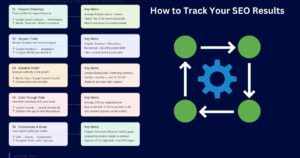
SEO without measurement is guesswork. Here’s what to track and why.
Organic Traffic
Organic traffic is the number of visitors arriving at your site through unpaid search results. If this number is growing over time, your SEO is working.
One caveat worth noting: AI summaries are now appearing directly in search results, which can reduce click-through rates even when your rankings are strong. This makes it important to track visibility — not just clicks.
Keyword Rankings
Tracking your rankings for target keywords shows you whether your content is moving in the right direction. Google Search Console gives you average ranking data for free.
For more detailed, keyword-by-keyword tracking with historical data, dedicated rank tracking tools offer much deeper insight.
AI Visibility
SEO just a few years ago: how often does your website get mentioned in AI-generated answers?
AI tools like ChatGPT, Perplexity, and Google’s AI Overviews are becoming a significant source of how people find information.
Research shows that around 73% of websites appearing in Google’s AI Overviews also rank in the top 10 organic results — meaning strong traditional SEO and strong AI visibility go hand in hand.
Tracking your AI mentions has become a meaningful part of a complete SEO strategy in 2026.
Share of Voice
Share of Voice measures what percentage of clicks you’re capturing for your tracked keywords compared to competitors. If your Share of Voice is rising, it’s a strong signal that your SEO is working, not just in absolute terms, but relative to the competition.
Final Thoughts
SEO isn’t a magic trick or a one-time task. It’s an ongoing process of understanding your audience, creating genuinely helpful content, building authority, and keeping your technical foundation solid.
The good news is that most of your competitors aren’t doing this well. Clear, consistent, human-focused SEO still wins, even in an era of AI search.