There’s a quiet war happening right now, and most fintech brands have no idea they’re losing it. It’s not a war over interest rates or app features, it’s a war over trust.Fintech Link Building Guide 2026
In 2026, fintech link building has become the most critical trust signal for Google, ChatGPT, and Perplexity when they decide which brands deserve to show up for searches like “best neobank for freelancers” or “how to send money internationally without fees.”
If your fintech brand isn’t winning that trust war, no amount of paid ads will save you in the long run.
This guide is for founders, marketers, and SEO leads who want to understand, clearly and honestly, how fintech link building actually works in 2026, why it matters more than ever, and what separates brands that dominate search from those that disappear after one algorithm update.

Why fintech link building is different from regular SEO
Something most generic SEO blogs won’t tell you: not all websites are treated equally by Google. Google has an internal category called YMYL Your Money or Your Life. It covers any content that could affect a person’s financial wellbeing, health, safety, or happiness.
Fintech sits right in the middle of this category. When someone reads your article on how to invest their savings or which payment processor to use for their business, the stakes are real. Google knows this, and it holds financial websites to a much higher standard than, say, a cooking bRD 4Elog.
A strong fintech link building strategy starts with understanding YMYL guidelines. It means a single bad backlink from a shady website can hurt you more than it would hurt a lifestyle blogger.
It means Google’s quality reviewers look at who is linking to you, not just how many links you have. Trust becomes your most valuable SEO asset, and trust is not something you write in your About page. It’s something other credible sources give you through editorial backlinks.
What a backlink actually does for fintech link building
Backlink like a recommendation letter. When Forbes writes about your fintech startup and links to your website, Google sees that as Forbes saying: “This brand knows what it’s talking about. We trust them enough to send our readers there.”
The more respected the source of that recommendation, and the more relevant it is to your topic — the more weight Google gives it. Without consistent fintech link building, even the best content struggles to rank in a YMYL vertical.
This is why 10 high-quality backlinks from authoritative financial publications will outperform 500 links from random blogs every single time.
The E-E-A-T framework and fintech link building
Google uses something called E-E-A-T to evaluate financial websites, Experience, Expertise, Authoritativeness, and Trustworthiness. Your backlink profile is one of the biggest contributors to your score across all four dimensions.
Experience: When a fintech practitioner links to your platform as a resource they actually use, Google gains real-world credibility signals about your brand.
Expertise: When respected finance journals or regulatory commentary sites mention your brand, subject-matter experts are validating your content.
Authoritativeness: High-authority backlinks from Investopedia, Bloomberg, or NerdWallet tell Google you’re a brand serious financial voices acknowledge.
Trustworthiness: Consistent placements on publishers with strong editorial standards signal that real editors have vouched for your content’s accuracy.
Effective fintech link building requires editorial placements, not bulk packages. You cannot manufacture E-E-A-T. You build it by consistently producing accurate, useful content and earning recognition from sources that already have credibility.
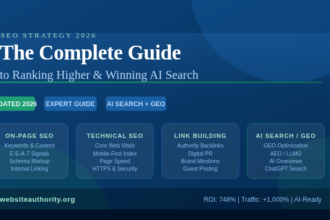
AI search has changed fintech link building forever
That has fundamentally shifted between 2023 and 2026: people no longer just Google things. They ask AI. Over half of Americans now use tools like ChatGPT, Google’s AI Overviews, or Perplexity to research financial decisions.
Which brands does AI recommend? The ones that appear repeatedly, consistently, and credibly across trusted sources on the web. This new discipline is called Generative Engine Optimization (GEO), and it’s becoming just as important as traditional SEO.
The brands that invest in fintech link building today show up in both Google and AI-generated answers. The brands that understand this in 2026 will have a massive advantage heading into 2027 and beyond.
6 fintech link building strategies that actually work in 2026
1. Original research — the strongest fintech link building asset
The single most powerful way to earn editorial backlinks in the fintech space is to own data that journalists and bloggers can’t get anywhere else. When you publish an original survey, “How 3,000 small business owners manage cash flow in 2026” every journalist writing about small business finance suddenly has a reason to link to you.
Annual benchmark reports, consumer sentiment studies, and regional fintech adoption data generate backlinks for months or years after they’re published.
2. Digital PR, earned media for fintech link building
Digital PR means proactively pitching stories, data, and expert perspectives to financial journalists. Not press releases.
Not promotional fluff. Real stories with genuine data or meaningful expert insight. A fintech CMO who responds to a Financial Times journalist’s request for comment with something actually useful earns a backlink from one of the most trusted financial publications in the world.
One editor who knows and trusts you is worth infinitely more than a spray-and-pray email campaign.
3. Guest posts that support your fintech link building strategy
Guest posting still works, but only when done with integrity. The publication needs to have a genuine financial audience, a real editorial process, and content standards that include fact-checking.
Target publishers with Domain Ratings above 50, verifiable organic traffic, and editorial standards you’d be proud to be associated with.
Avoid any service that offers “guaranteed placements” without editorial review, in a YMYL vertical, those placements can trigger penalties that take months to recover from.
4. Regulatory content journalists need
Every time a major regulation changes, new SEC guidance, updated CFPB rules, PSD3 in Europe, evolving crypto compliance standards, journalists covering financial news need accurate explainers.
Fintech brands that publish fast, accurate, compliance-reviewed breakdowns become go-to sources for financial journalists.
The result is editorial links from news sites, legal publications, and trade press that competitors without compliance infrastructure simply cannot earn.
A practical fintech link building checklist for YMYL compliance and Google trust signals.
5. Broken links and competitor gap analysis
Find links on authoritative financial websites that point to dead or outdated pages. Reach out to those site owners, offer your own resource as a replacement, and earn a contextually relevant placement.
Pair this with competitive gap analysis using tools like Ahrefs or Semrush, find high-authority sites that link to your competitors but not to you, create something better, and reach out with a genuine pitch.
6. Thought leadership through podcasts and events
Fintech founder or executive appears on an industry podcast, speaks at a conference, or publishes commentary in a recognized trade journal, it creates brand entity signals that reinforce E-E-A-T.
Podcast show notes get published online. Conference organizers list speakers on dedicated pages. Each of these creates a citation that strengthens your brand’s recognized expertise — and often converts into direct backlinks too.
What makes a fintech link building campaign successful?
Before you pursue or accept any link, run it through these filters:
- Domain Rating 50+: relevance matters as much as raw authority
- Genuine financial audience: the publication’s readers should care about fintech
- Real editorial standards: named authors, fact-checking, editorial oversight
- Organic traffic: verify in Ahrefs or Semrush; high DR with zero traffic is a red flag
- Natural anchor text: contextually embedded language, not keyword-stuffed phrases
- Clean content neighborhood: the publisher shouldn’t also link to gambling or pharmaceutical spam
Fintech link building compounds like interest over time. One strong link that passes all these filters beats 100 links that don’t. Your E-E-A-T score depends heavily on the quality of your fintech link building history not the volume.
Mistakes that kill fintech rankings

The fintech space has some of the highest-stakes SEO environments online. Getting this wrong isn’t just a missed opportunity, it can collapse your organic traffic for months.
Bulk link packages from link farms: trigger Google penalties in YMYL verticals.
Undisclosed paid placements: paid links must carry nofollow or sponsored tags.
Over-optimized anchor text: using your target keyword as anchor text on every backlink is a spam signal.
Ignoring toxic link monitoring: monthly monitoring and disavow submissions are maintenance tasks, not optional extras.
How to measure your fintech link building results
Avoid vanity metrics. The numbers that actually matter for fintech link building:
Referring domain growth (quality-filtered): net new domains with DR 40+ per month, not total backlink count.
Share of voice in high-intent queries: are you gaining ground for searches that drive signups and funded accounts?
AI citation frequency: track how often your brand appears in AI-generated answers. This is your GEO ranking position.
Organic traffic to commercial pages: pricing pages, demo request forms, and product landing pages.
Domain authority trend: track over 6–12 month rolling windows. Week-to-week is noise; quarterly trajectory is signal.
Questions to ask any fintech link building agency
Before handing over budget to any fintech link building service, ask these:
- Show me live placement examples from financial publications — verify domain ratings independently.
- How do you vet publishers for YMYL compliance? Legitimate services have a documented process.
- What’s your anchor text strategy? Anyone promising exact-match keyword anchors is a red flag.
- Do you monitor for toxic links and submit disavows? Non-negotiable in a high-spam vertical.
- How are you adapting to AI search and GEO visibility? An agency still thinking only about Google rankings is already behind.
Trust is your actual product
The thing that gets lost in all the tactical detail: in fintech, trust isn’t a marketing asset, it’s the product itself. Nobody hands over their banking credentials, investment portfolio, or business payment data to a brand they don’t trust.
And in 2026, people discover the brands they trust through search, traditional Google search and increasingly through AI-generated recommendations.
The brands winning in search today have invested heavily in fintech link building, earning editorial backlinks from credible voices in the industry.
Every link you earn tells Google, tells AI systems, and tells human readers that real experts with real reputations have looked at your brand and decided it’s worth pointing people toward.
That’s not a technical SEO exercise. That’s brand-building at its most fundamental level. Start your fintech link building strategy today at websiteauthority.org.