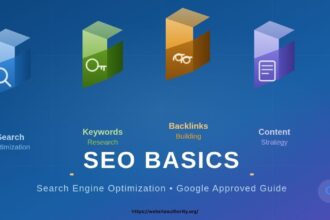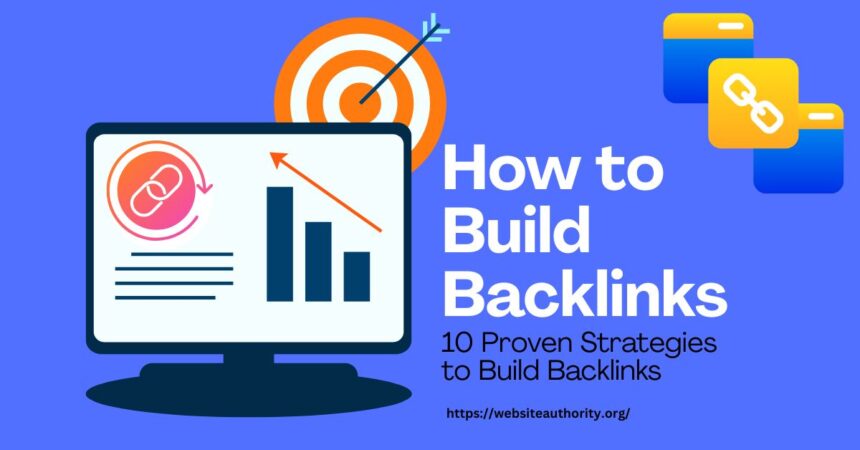
Backlinks are one of the most powerful ranking factors in SEO. If you want to improve your website authority and rank higher on Google, learning how to build backlinks the right way is essential.
You will discover 10 proven link building strategies that actually work in 2026, no shady tactics, no spam, just white-hat methods that Google rewards.
What Are Backlinks and Why Do They Matter?
A backlink is a link from one website to another. When Website A links to Website B, that is a backlink for Website B.
Think of backlinks as votes of confidence. Every time a reputable website links to yours, it is telling Google: “This content is trustworthy and valuable.” The more quality votes you collect, the more Google trusts your website and the higher you rank.
Backlinks are directly connected to your website authority. Sites with stronger backlink profiles consistently rank higher, attract more organic traffic, and earn more clicks than sites without them.
According to extensive SEO research, backlinks remain one of Google’s top three ranking factors alongside content quality and RankBrain. This has not changed much over the years links still signal authority and relevance.
What Makes a High-Quality Backlink?
Not all backlinks are created equal. Before diving into strategies, you need to understand what separates a powerful backlink from a useless one.
1. Relevance
A backlink from a website in your niche carries far more weight than one from an unrelated industry. If you run an SEO blog and you get a link from another digital marketing website, that is highly relevant. A link from a cooking website? Much less valuable.
2. Domain Authority
Links from high-authority domains pass more SEO value (also called “link juice”) to your website. A single link from a well-established news publication or industry blog can outweigh dozens of links from low-quality sites.
3. Placement on the Page
Links placed within the main body content of an article are more valuable than links hidden in footers, sidebars, or comment sections. Editorial links where a real person chose to link to you because your content is useful are the gold standard.
4. Anchor Text
The clickable text of a link (anchor text) gives Google context about what your page is about. Natural, relevant anchor text improves your ranking for related keywords. Over-optimized or spammy anchor text can trigger penalties.
5. Dofollow vs. Nofollow
Dofollow links pass SEO authority. Nofollow links do not pass link juice but still drive referral traffic and look natural to Google. A healthy backlink profile includes both.
10 Proven Strategies to Build Backlinks
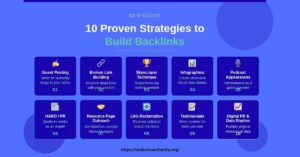
1: Guest Posting on Authority Websites
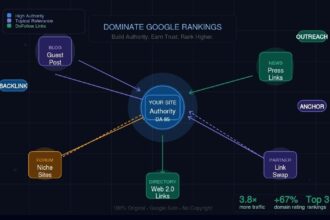
Guest posting means writing articles for other websites in your niche in exchange for a backlink to your site. It is one of the most reliable and scalable link building methods available.
How to do it:
- Search Google for: your niche + “write for us” or your niche + “guest post”
- Find websites with genuine traffic and good domain authority
- Pitch them a specific, valuable topic that fits their audience
- Write a high-quality article and include one natural link back to your website
Focus on websites that are relevant to SEO, digital marketing, or website growth if you are targeting a similar niche to websiteauthority.org.
The Skyscraper Technique
Popularized by Brian Dean of Backlinko, the Skyscraper Technique involves finding top-ranking content in your niche, creating something significantly better, and then reaching out to websites that link to the original piece.
Step-by-step:
- Search for a popular topic in your niche
- Find the top-ranking articles that already have backlinks
- Create a more comprehensive, updated, and better-designed version
- Use tools like Ahrefs or Moz to find who links to the original
- Email those websites and let them know your improved version exists
3: Broken Link Building
Every website on the internet has broken links — links that point to pages that no longer exist. Broken link building means finding those dead links and suggesting your content as a replacement.
How it works:
- Use a tool like Ahrefs, Semrush, or Check My Links (Chrome extension)
- Find broken links on relevant websites in your niche
- Check if you have existing content that could replace the broken page
- If not, create relevant content
- Email the website owner, inform them of the broken link, and suggest your page as a replacement
This is a win-win: the website owner fixes a broken link, and you earn a backlink.
4: Create Link-Worthy Original Research
Original data and research is one of the most powerful link magnets you can create. When you publish unique statistics or original study results, other bloggers and journalists naturally link to you as a source.
Ideas for original research:
- Survey your audience and publish the results
- Analyze publicly available data and extract new insights
- Run a case study on your own website’s SEO progress
- Compile industry statistics from multiple sources into one comprehensive resource
Original research from your own site for example, a study on “How Long It Takes to Build Website Authority” could attract links from SEO blogs, marketing sites, and news publishers for years.
5: HARO (Help a Reporter Out)
HARO now also available through alternative platforms like Qwoted and SourceBottle connects journalists with expert sources. When a journalist is writing a story and needs a quote, they post a request. You respond with your expertise and, if selected, they include your quote along with a link to your website.
How to get started:
- Sign up for HARO (helpareporter.com) or a similar service
- Choose categories related to your niche (Technology, Business, Marketing)
- Respond quickly to relevant queries with specific, helpful answers
- Include your name, website, and credentials in every response
HARO placements often appear on major publications with very high domain authority, making each placement extremely valuable.
6: Build Resource Page Links
Many websites maintain “resource pages” curated lists of helpful tools, guides, and articles for their audience. Getting your content listed on a relevant resource page earns you a high-quality, permanent backlink.
How to find resource pages:
Search Google for:
- your niche + “useful resources”
- your niche + “recommended links”
- your niche + “helpful tools”
7: Digital PR and Newsjacking
Digital PR involves getting your brand or website mentioned in news articles, blog roundups, and industry publications. Newsjacking means tying your content to trending news stories to attract media attention.
Tactics that work:
- Publish expert commentary on major industry news
- Create data-driven press releases about your research
- Offer exclusive insights to journalists covering your niche
- Build relationships with writers and editors in your industry
For an SEO and website authority niche, reacting to major Google algorithm updates with expert analysis is an excellent way to attract links from other SEO blogs and digital marketing publications.
8: Reclaim Unlinked Brand Mentions
Sometimes websites mention your brand, your content, or your website by name without actually linking to you. These unlinked mentions are easy link opportunities waiting to be claimed.
How to find unlinked mentions:
- Set up Google Alerts for your brand name and website name
- Use tools like Ahrefs Content Explorer or Mention.com
- Search Google for your brand name and filter by time period
When you find an unlinked mention, simply email the author, thank them for mentioning you, and politely ask them to add a link. Most authors are happy to do this because it takes only seconds.
9: Testimonials and Case Studies
Businesses love featuring testimonials from real customers on their websites. If you use a tool, software, or service that is relevant to your niche, offer to write a genuine testimonial. In return, many companies will link back to your website from their testimonials page.
How to make this work:
- Identify tools and services you genuinely use and recommend
Write a detailed, sincere testimonial - Send it to the company and offer your website URL for attribution
- Many companies with high domain authority will link back to you
This strategy takes minimal time and can earn you links from company websites with strong domain authority.
10: Internal Linking (Support Your Own Authority)
While internal links do not come from external websites, they are critical for distributing your existing link authority effectively across your site.
When you publish a new article, link to it from your older, more established pages. This passes authority to the new page and helps Google discover and index it faster.
Strong internal linking signals to Google that your website covers topics in depth, which increases your topical authority and improves your chances of ranking for competitive keywords.
How Many Backlinks Do You Need to Rank?
There is no universal answer , it depends entirely on the competition in your niche and the keyword you are targeting.
For low-competition keywords (like long-tail searches), a brand-new website can sometimes rank with zero backlinks if the content is highly relevant. For competitive keywords like “how to build backlinks,” you may need dozens or even hundreds of high-quality links from authoritative domains.
The most important thing to do is analyze your direct competitors. Search for your target keyword, look at the top-ranking pages, and use a free tool like Moz’s Link Explorer or Ahrefs to check how many backlinks those pages have. That gives you a realistic benchmark to work toward.
Key insight: Focus on quality over quantity. Ten backlinks from relevant, high-authority websites will consistently outperform one hundred links from low-quality or irrelevant sites.
Common Link Building Mistakes to Avoid
Learning how to build backlinks also means knowing what NOT to do. Google actively penalizes websites that engage in manipulative link building practices.
Avoid these mistakes:
Buying backlinks Purchasing links is a violation of Google’s guidelines. Sites caught buying or selling links risk manual penalties that can destroy their search rankings overnight.
Link schemes and PBNs, Private Blog Networks (PBNs) are networks of sites created purely to generate backlinks. Google has become increasingly effective at identifying and penalizing these schemes.
Irrelevant links Getting thousands of backlinks from websites unrelated to your niche looks unnatural and may trigger algorithmic filters.
Over-optimized anchor text Using your exact target keyword as anchor text for every single backlink looks manipulative. Vary your anchor text naturally.
Ignoring link quality. A directory of spam sites or low-quality blog networks will not help your authority. In some cases, bad links can actively harm your rankings. Use Google’s Disavow Tool if necessary.
Final Thoughts
Building backlinks is a long-term investment, not a quick fix. But when done correctly, each high-quality link you earn compounds over time increasing your website authority, improving your search rankings, and driving more organic traffic to your site.
Start with the strategies that best fit your current resources and scale from there. Guest posting and broken link building are great starting points. As your site grows, original research and digital PR will help you earn links at scale.
FAQs
How long does it take to see results from link building?
Most link building efforts take 3 to 6 months to show noticeable impact on rankings. Google needs time to crawl, index, and process new links. Be patient and consistent.
Are free backlinks as good as paid backlinks?
Naturally earned, free backlinks from reputable websites are far better than paid links. Paid links violate Google’s guidelines and carry significant risk.
How do I check who is linking to my website?
Use free tools like Google Search Console (under Links), Moz Link Explorer, or Ahrefs Site Explorer to see your complete backlink profile.
Can I build backlinks for free?
Yes. Guest posting, broken link building, HARO, and resource page outreach can all be done without spending money. They require time and effort, but not a financial investment.
What Is it better to have many backlinks or fewer high-quality ones?
Quality always wins. Ten backlinks from authoritative, relevant websites will deliver better results than hundreds of links from low-quality sources.